Exhibition · May 2025
B-Walls 2025: Bringing Street Art into the Gallery
A Minsk exhibition curated by tcp.375 and REON, bringing artists from Belarus’s street-art scene and the visual language of graffiti into a gallery setting.
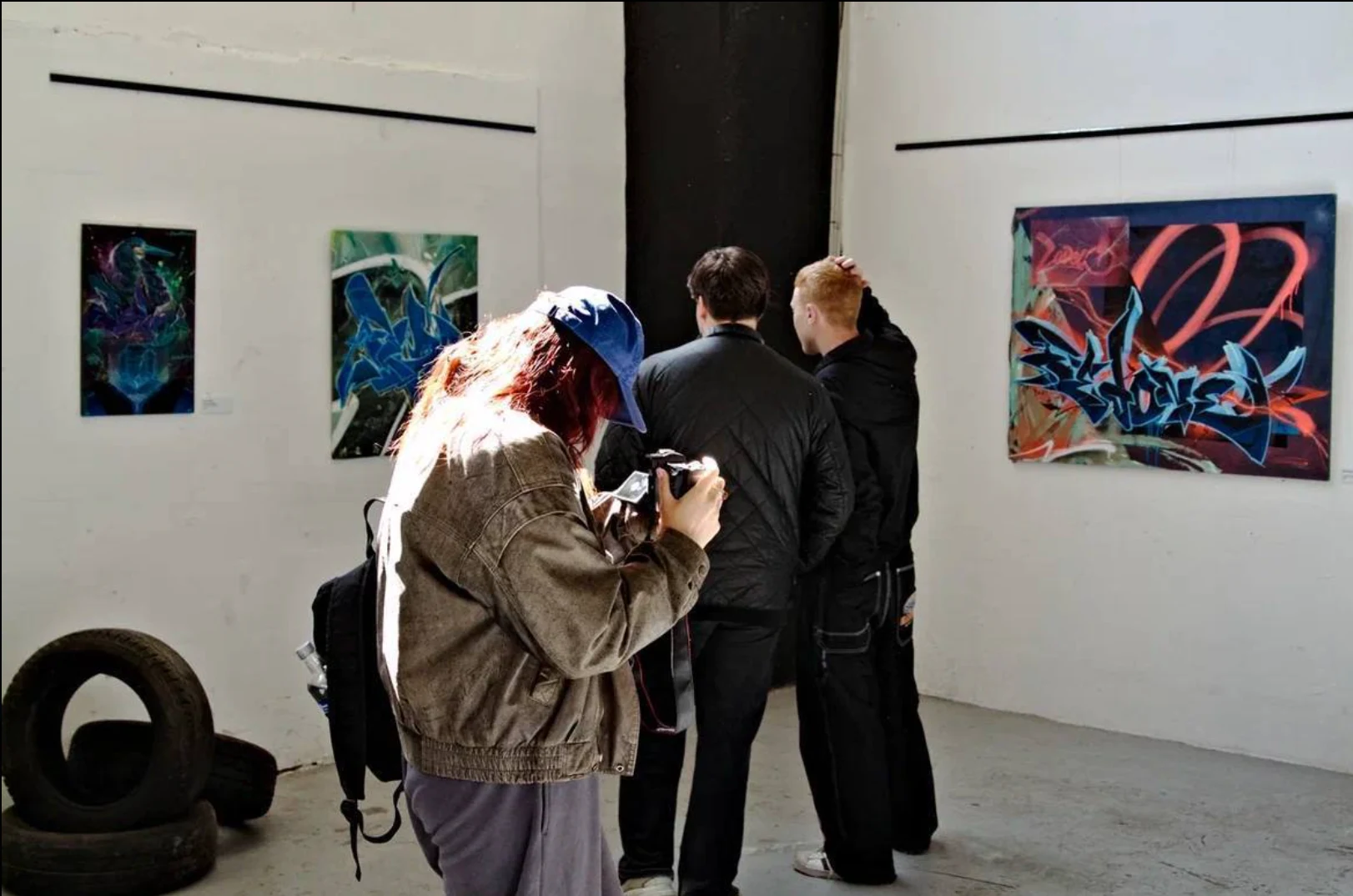
B-Walls — Street Art in the Gallery
B-Walls is a collaborative project by tcp.375 and REON, who initiated and curated the exhibition. The project sets out to present contemporary urban culture through the work of artists whose visual language is deeply shaped by the city.
Several directions meet here: graffiti, street art, murals, calligraphy, typography, abstraction, urban graphics, and contemporary art.
The result is a space between graffiti and the gallery, the street and the exhibition hall, urban culture and contemporary art.
The Artists of B-Walls
The exhibition brought together artists working across different parts of contemporary urban culture:
- Fyodor Fedo
- Dima Wesko
- Poyer
- Nikmas
- White
Each artist brings a distinct approach to street art and graffiti art.
Fyodor Fedo works with images that combine a recognisable urban sensibility with a more conceptual artistic language. His work shows how the visual devices of street art can move beyond the wall and become independent artworks.
Dima Wesko came out of the classic graffiti scene and gradually expanded his visual language. He moved from lettering and graffiti towards canvas, abstraction, and conceptual art. His practice clearly demonstrates how an artist can move from the street into contemporary exhibition-making.
Nikmas works primarily with calligraphy and typography. His practice is rooted in letters, signs, and the visual structure of text. He takes the language of graffiti and calligraphy far beyond the traditional urban setting — onto canvases, walls, objects, and unconventional surfaces.
Poyer represents another direction within Belarusian graffiti, where form, colour, composition, and the urban surface all play an important role.
White adds another interpretation of contemporary street culture to the shared artistic space of B-Walls.
Together, these artists offer a cross-section of Belarusian street art, from classic graffiti and lettering to calligraphy, abstraction, and experimental urban art.
From Graffiti to Contemporary Art
An artist may begin with graffiti on walls, take part in graffiti jams and street festivals, work with murals, and later move towards canvas, installation, sculpture, or gallery projects.
That is why the boundary between graffiti, street art, urban art, and contemporary art feels increasingly fluid.
B-Walls works directly within that space.
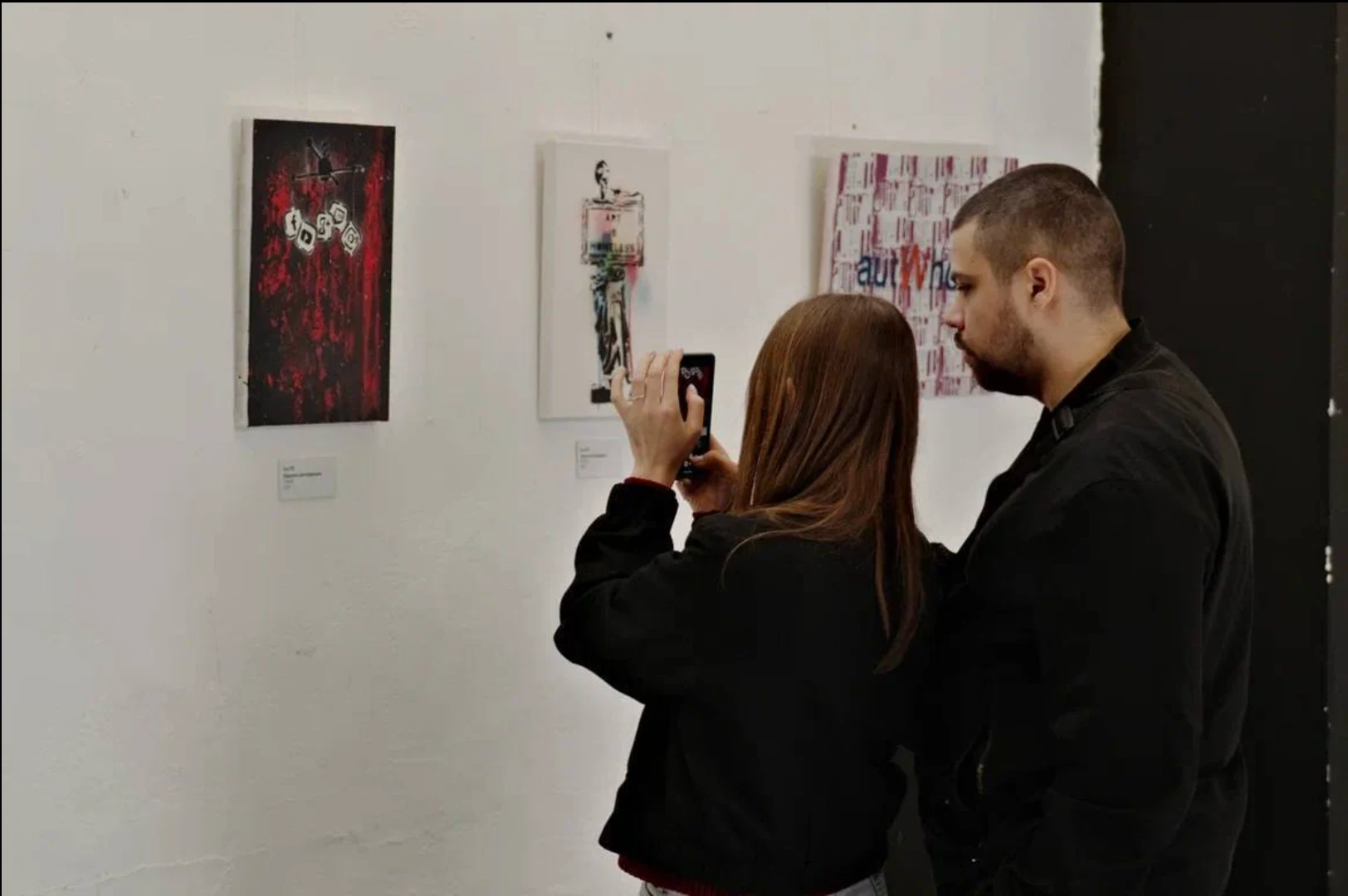
A work made on a wall belongs to a specific place and depends on its urban surroundings. In a gallery, it becomes an independent object that can be viewed, collected, discussed, and preserved.
The visual language, however, remains.
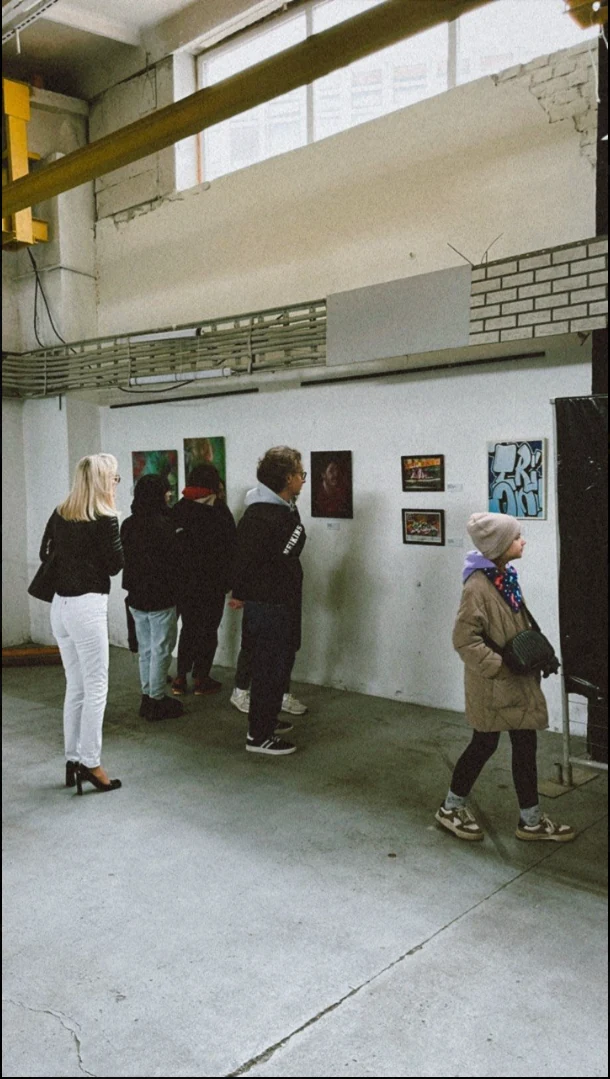
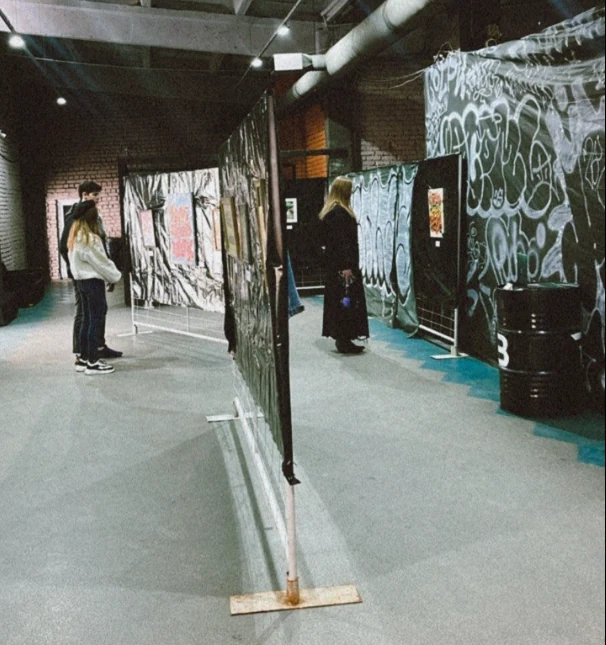
Inside the Exhibition Space
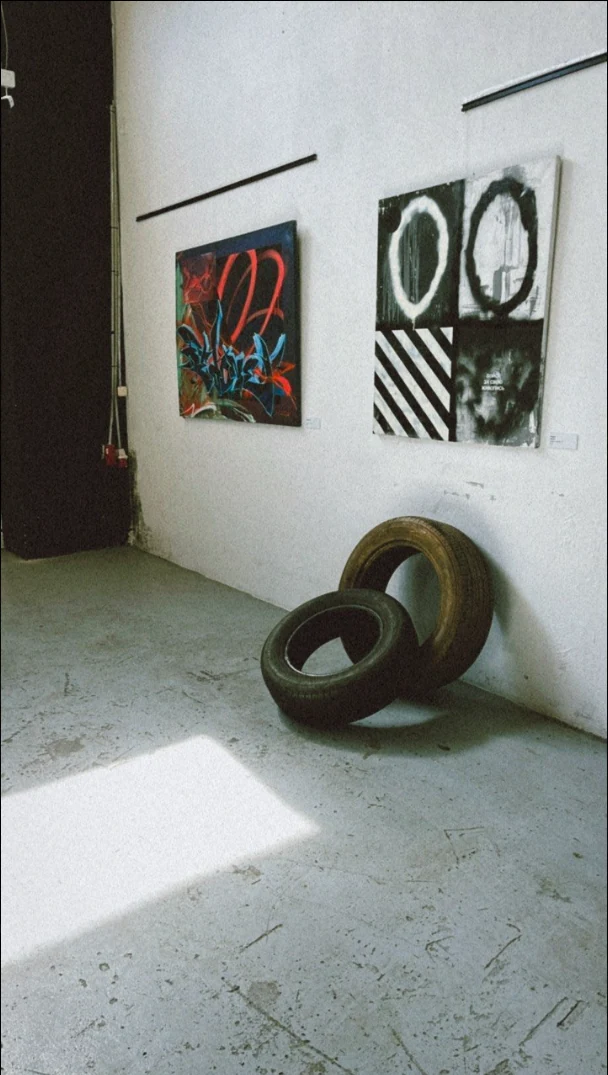
B-Walls retains key elements of street culture:
- large-scale imagery;
- expressive lettering;
- the visual language of graffiti;
- bright, high-contrast graphics;
- experimentation with form and materials;
- a free approach to composition;
- the visual language of the urban environment;
- the influence of graffiti culture and street culture.
At the same time, an exhibition space changes how the works are perceived.
On the street, the viewer encounters a work as part of the city. It exists among architecture, transport, people, advertising, and other visual elements.
In a gallery, attention is focused directly on the work.
Moving street art into a gallery is therefore more than a change of location. The context changes, as does the way people interact with the work and the way they see the artist.
A graffiti writer becomes an author working with space. A wall painting becomes an artwork. Urban graphics become part of an exhibition.
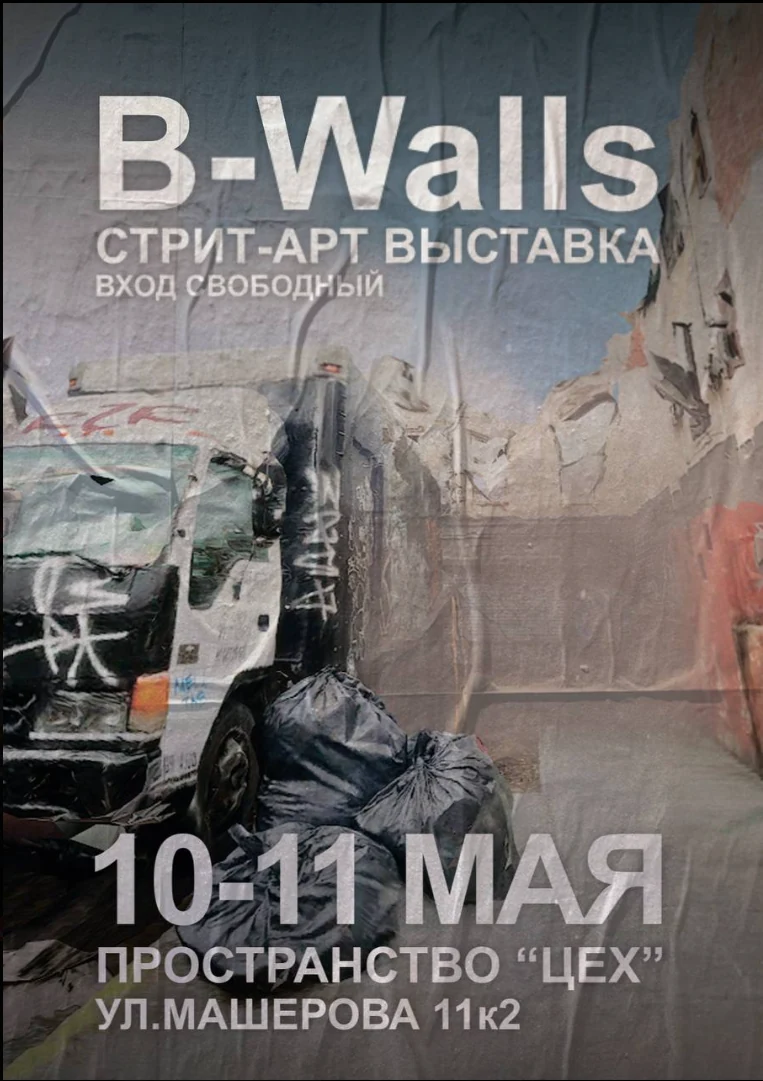
Belarusian Street Art and Minsk
For Minsk, this process is particularly interesting.
Belarusian street art has its own history of graffiti, murals, urban painting, and public art. Several generations of artists have developed practices around letters, characters, abstraction, calligraphy, and large-scale wall compositions.
Minsk is gradually becoming a place where street art exists at once on streets, at festivals, across urban sites, in studios, and in galleries.
B-Walls is part of that process.
Exhibitions like this create a place where members of the graffiti community, artists, curators, collectors, and visitors can meet.
For artists, it is a chance to show work to an audience that may not be familiar with graffiti culture. For visitors, it is an opportunity to encounter contemporary street art not only on a city wall, but as an independent artistic practice.
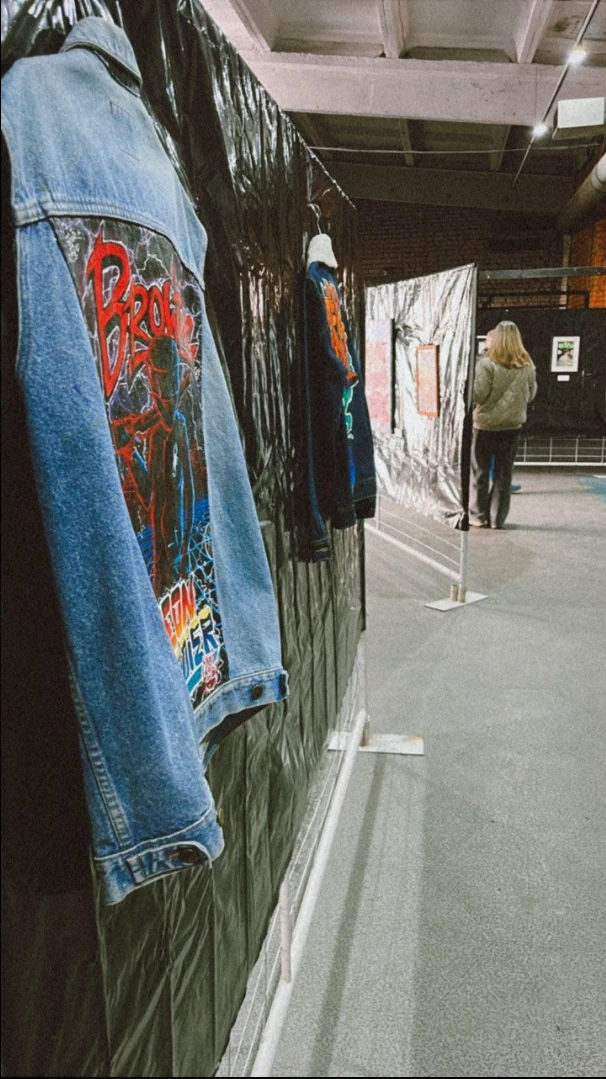
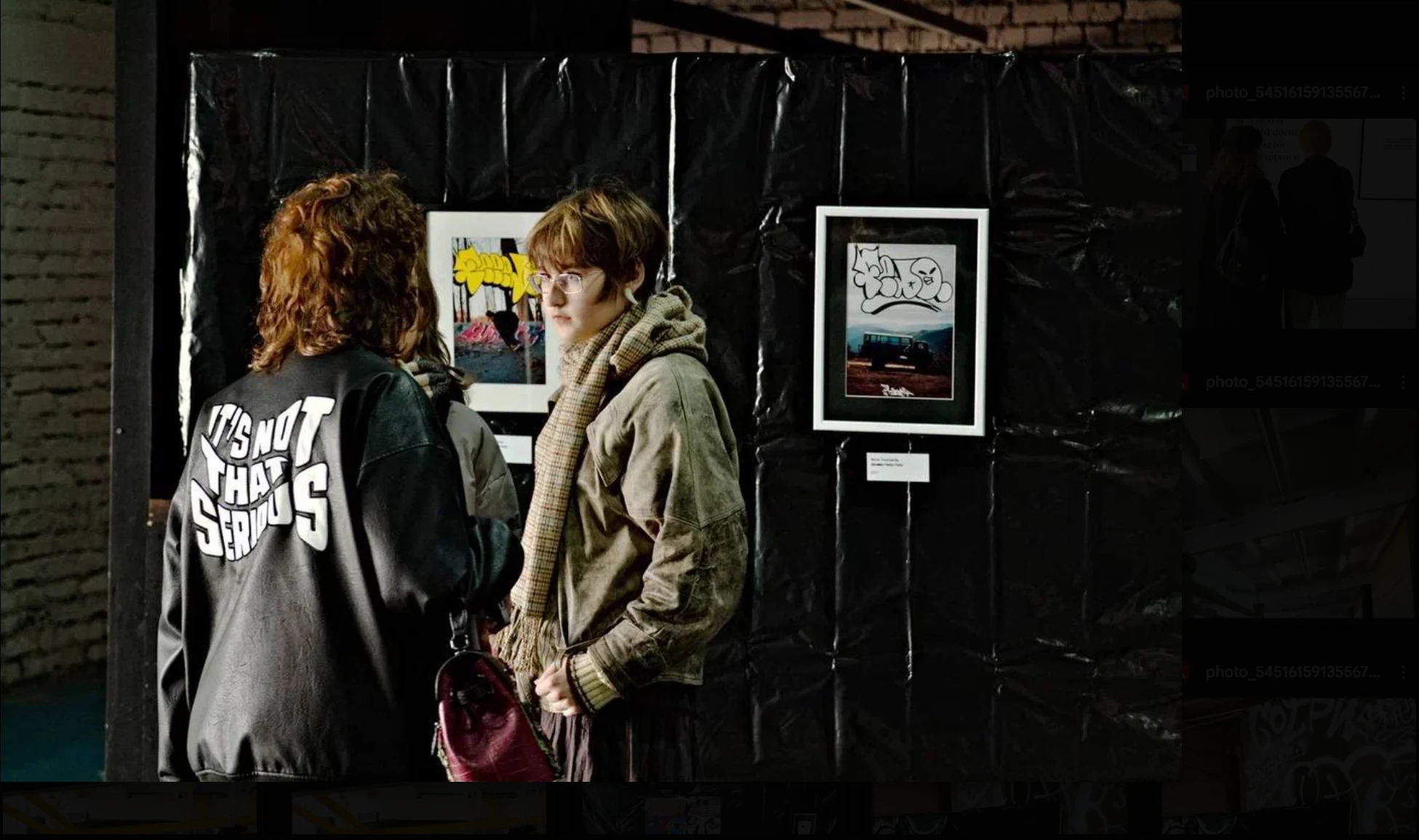
Street Art as Urban Culture
Street art does not exist only as an artistic movement.
It is part of urban culture and the visual environment.
Graffiti creates its own aesthetics, slang, systems of signs, communities, and rules. Murals change how architecture is perceived. Street artists engage with urban history, local communities, and place.
Contemporary street art therefore cannot be understood simply as a collection of images on walls.
It is at once art, graffiti culture, urban communication, visual activism, design, and a form of self-expression.
B-Walls presents this side of street culture through an exhibition format.
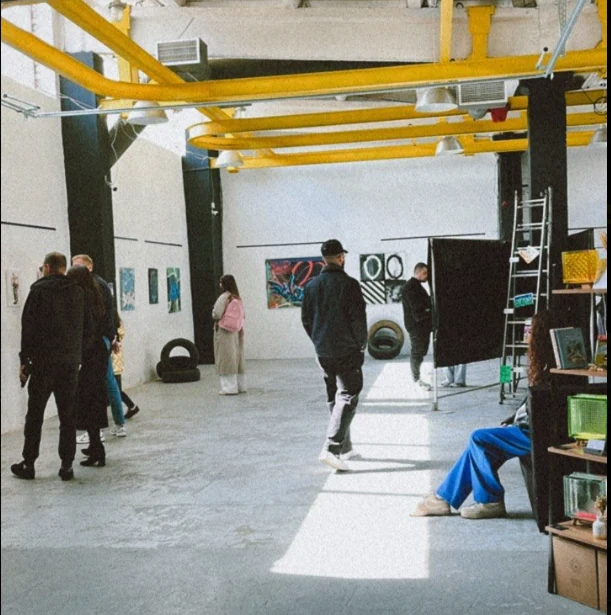
Street Art as an Archive of the City
There is another important aspect.
Street art often exists only briefly. A wall can be painted over, a building reconstructed, and a work can disappear along with the architecture that held it.
An exhibition makes it possible to preserve the work in another form.
In this sense, B-Walls becomes a kind of archive of contemporary Belarusian street art.
The works of Fedo, Dima Wesko, Poyer, Nikmas, White, and other artists can exist independently of one particular city wall.
At the same time, the exhibition records a particular moment in the development of Belarusian urban culture — a moment when graffiti and street art are engaging more actively with galleries and contemporary art.
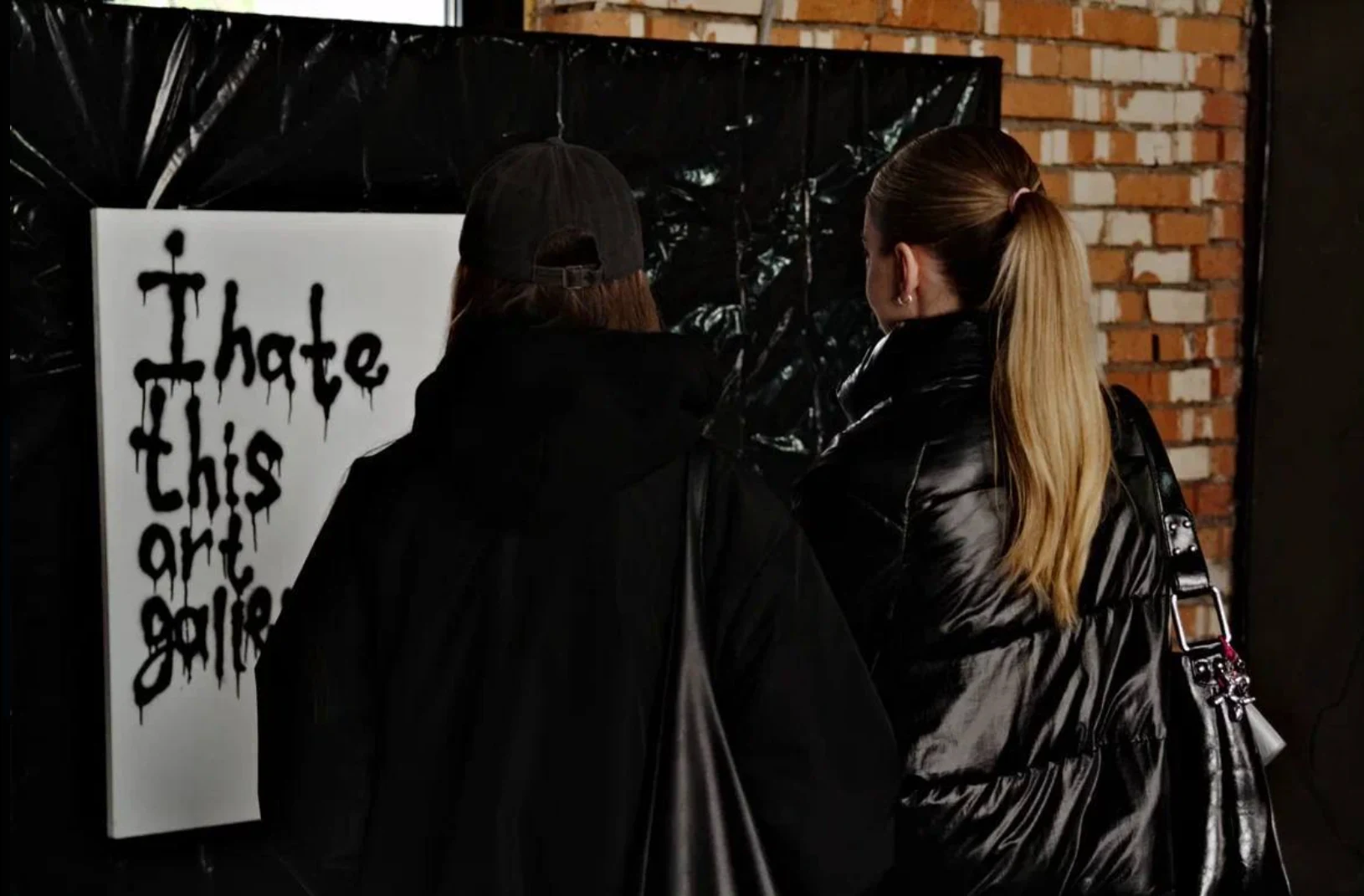
Does Street Art Remain Street Art in a Gallery?
This is perhaps the central question of B-Walls.
If a graffiti work appears on canvas, does it stop being graffiti?
If an artist who began on the street exhibits in a gallery, do they become simply a contemporary artist?
There is no single answer.
Street art keeps changing the boundaries of its own existence. It appears on walls, trains, abandoned buildings, canvases, objects, in digital spaces, and in exhibition rooms.
That ability to adapt remains one of the defining qualities of street culture.
B-Walls and a New Chapter for Belarusian Street Art
B-Walls is an exhibition project assembled by tcp.375 and REON, bringing representatives of Belarusian street culture together and presenting their work in a gallery context.
Fyodor Fedo, Dima Wesko, Poyer, Nikmas, and White show different sides of contemporary graffiti and street art, from lettering and calligraphy to abstraction, urban graphics, and experimental art.
B-Walls becomes a meeting point for several cultures: graffiti, street art, urban culture, contemporary art, and the gallery.
That is where the significance of projects like this lies: the street and the gallery no longer have to exist as two completely separate worlds.
Published by Street Walls Gallery